
Slovenian Film History
1905–1906 – The First Slovenian Film Footage
In Ljutomer in 1905, Karol Grossmann filmed Dismissal from Mass in Ljutomer and The Fair at Ljutomer, followed a year later by In the Family Garden. The earliest surviving film footage by a Slovenian filmmaker was discovered in 1951 by film historian France Brenk.
1907 – The First Permanent Cinema
The Edison cinema opens in Ljubljana as Slovenia's first permanent cinema hall. The establishment of a dedicated venue for film screenings marks an important shift from traveling shows to regular cinema exhibition.
1922 – Slovenija Film
Veličan Bešter establishes Slovenija Film, the first Slovenian film production company.
1922 – Skiing Competition for the Yugoslav Skiing Championship in Planica Rateče
Veličan Bešter’s film is the earliest surviving Slovenian tinted film, the first Slovenian sports film and the first Slovenian film to receive a published film review.
1927 – Sava Film
Metod Badjura establishes Sava Film, one of the first enduring Slovenian film companies. Editor and filmmaker Milka Badjura also plays an important role in its work.
1930s – Marjan Foerster, the First Professionally Trained Slovenian Filmmaker
After studying film in Berlin, Marjan Foerster establishes himself as the first professionally trained Slovenian filmmaker. He works as a director, cinematographer, editor and film educator. He makes the first Slovenian commercial, Yugoslav Publishing House (1940), and the first Slovenian art film, Oh, Vrba (1945).
1931 – The First Slovenian Feature Film
The silent fiction-documentary film In the Realm of Goldenhorn, directed by Janko Ravnik, premieres. Produced in cooperation with the Skala mountaineering organisation, it is regarded as the first Slovenian feature film. Just one year later, Ferdo Delak makes The Slopes of Triglav, the second Slovenian feature-length silent film. Produced by Sava Film, it continues the early association between Slovenian cinema, the mountains and mountaineering culture.
1939 – Emona Film
Milan Kham establishes Emona Film, the most technically and organisationally advanced film company in Slovenia at the time. After the Second World War, the company is nationalised.
1941–1945 – Partisan Film Records
During the Second World War, documentary footage is made of the Partisan movement, life in liberated territory, and political and military events. Among the cinematographers is painter, printmaker and filmmaker Božidar Jakac. These records form an important part of Slovenian cinematic and historical memory.
1945 – Državno filmsko preduzeće DFJ (The State Film Enterprise)
After the Second World War, the State Film Enterprise is established in Belgrade, with branches in the individual Yugoslav republics.
1945 – The Beginnings of Education
The Academy of Dramatic Arts is established and gradually expands its curriculum in the following years to include radio and film. In 1963, it is renamed the Academy of Theatre, Radio, Film and Television.
1946 – Triglav Film and Vesna Film
Following the reorganisation of the Slovenian branch of the State Film Enterprise, the production company Triglav Film and the distribution company Vesna Film are established. Triglav Film becomes the principal force behind professional film production in Slovenia, while Vesna Film is responsible for film distribution and exhibition.
1946 – Film Newsreels
Filmski obzorniki newsreels begin regular production, covering current political, economic and social events. Screened in cinemas before the main feature, they later become an important precursor to television news programming.
1948 – The First Slovenian Feature-Length Sound Film
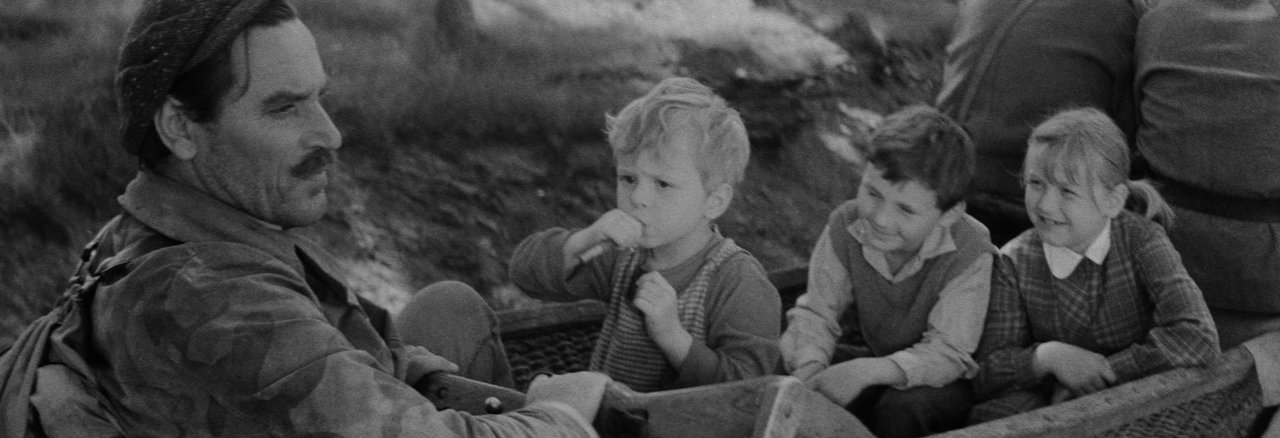
France Štiglic directs On Our Own Land, the first Slovenian feature-length sound film. In 1949, the film is selected for the competition programme at the Cannes Film Festival, marking the first major international appearance of Slovenian cinema.
1951–1952 – Kekec and the Golden Lion in Venice
Jože Gale directs Kekec, the first Slovenian feature film for young audiences. In 1952, the film receives the Golden Lion in the youth film category at the Venice Film Festival. It also achieves exceptionally wide international distribution, enjoying particular success in China, where it is screened for several years in numerous cities and provinces from 1957 onwards.
1956 – Filmservis and Viba Film
Triglav Film’s technical division establishes Filmservis, providing film studios, equipment and technical services. In the same year, Slovenian filmmakers establish Viba Film, which develops into Slovenia’s central film production company.
1957 – The Valley of Peace and an Award at Cannes
France Štiglic’s The Valley of Peace is selected for the main competition at the Cannes Film Festival. John Kitzmiller receives the Best Actor Award for his role as an American pilot.
1958 – Television Ljubljana
Television Ljubljana begins regular broadcasting. It gradually becomes an important producer of fiction, documentary and other audiovisual works, expanding the scope of Slovenian audiovisual production.
1963 – AGRFT
The academy is renamed the Academy of Theatre, Radio, Film and Television (AGRFT). Film education and the production of student films become important foundations for developing new generations of Slovenian directors.
1966–1975 – The Transition from Triglav Film to Viba Film
Following Triglav Film’s bankruptcy in 1966, Viba Film takes over its studios, premises and laboratory. In 1975, Triglav Film formally merges with Viba Film, which remains Slovenia’s leading film producer until 1991.
1968 – The Slovenian Film Archive
The Slovenian Film Archives is established within what was then the Archives of Slovenia to collect, safeguard and preserve Slovenia’s film heritage.
1970s – Slovenian Film Modernism
Films by Boštjan Hladnik, Matjaž Klopčič, Karpo Godina, Jože Pogačnik and other filmmakers develop a distinctly auteur-driven, socially critical and formally daring cinema.
1980s – The Growing Popularity of Youth Films
Films such as Hang on, Doggy! (1977), A Summer in a Seashell (1986), and others become an important part of Slovenian popular culture, shaping generations of local audiences. Youth films remain a mainstay of domestic cinema distribution to this day.
1980s and 1990s – The Rise of Independent Video Art
Alongside institutional film and television production, an independent video scene emerges, closely connected with alternative culture, performance, music, visual art, and new social movements. The work of groups and venues such as ŠKUC-Forum and FV Video, followed by various independent artists and producers, expands Slovenian audiovisual creativity beyond conventional film and television.
1991 – The First Feature Film of Independent Slovenia
Vinci Vogue Anžlovar’s Grandma Goes South is the first Slovenian feature film made after Slovenia gained independence. The road comedy marks the beginning of a new era in Slovenian cinema and becomes one of the most recognisable Slovenian films of the 1990s.
1994 – The Film Fund of the Republic of Slovenia
The Film Fund of the Republic of Slovenia is established, taking over the planning and co-financing of the national film programme. Film production gradually shifts to independent producers.
1996 – The Slovenian Cinematheque
The Slovenian Cinematheque is established as the national institution for the exhibition, study and presentation of film heritage and the development of film culture. Its roots date back to 1963, when the Yugoslav Cinematheque Cinema began operating in Ljubljana.
1997 – Express, Express
Igor Šterk’s debut feature Express, Express marks the rise of the first generation of Slovenian filmmakers after independence and the beginning of a new era in the country’s national cinema.
2001 – Bread and Milk and the Lion of the Future
Jan Cvitkovič’s debut feature Bread and Milk receives the Lion of the Future Award for Best First Feature at the Venice Film Festival
2001–2002 – The International Success of No Man’s Land
The Slovenian minority co-production No Man’s Land, directed by Danis Tanović, receives the Best Screenplay Award at Cannes in 2001, followed by a Golden Globe and, in 2002, the Academy Award for Best Foreign Language Film. The Slovenian co-producers are Studio Maj and Casablanca. Branko Đurić, Tanja Ribič and Branko Završan appear in leading and supporting roles, while several other Slovenian film professionals also contribute to the production.
2002 – The First Slovenian Feature Film Directed by a Woman
Maja Weiss directs Guardian of the Frontier, the first Slovenian feature film for theatrical release directed by a woman. The film marks an important milestone in the history of Slovenian women directors and explores questions of identity, sexuality, borders and exclusion.
2003 – The New Viba Film Studios
Viba Film Studio opens its new premises in Stegne, Ljubljana. The studio provides sound stages, film equipment, and picture and sound post-production services for Slovenia’s national film programme.
2003 – Spare Parts in Competition at the Berlinale
Damjan Kozole’s Spare Parts is selected for the Berlinale’s main competition. It is the first Slovenian feature film since independence to compete in the main programme of one of the world’s three major film festivals.
2003–2004 – (A) Torsion: Golden Bear, European Film Award and Academy Award Nomination
The short film (A)Torsion, directed by Serbian filmmaker Stefan Arsenijević and produced in Slovenia, receives the Golden Bear for Best Short Film at the Berlinale in 2003, as well as the European Film Award for Best Short Film. In 2004, it is also nominated for the Academy Award for Best Live Action Short Film.
2010s – The International Rise of Slovenian Auteur Cinema
Slovenian films are increasingly selected for programmes at festivals in Cannes, Berlin, Venice, Locarno, Karlovy Vary, Rotterdam and elsewhere. Slovenian auteur documentary, animated, and short films are experiencing particularly strong growth.
2011 – The Slovenian Film Centre
The Slovenian Film Centre, a public agency of the Republic of Slovenia, begins operating as the legal successor to the Film Fund. The Centre supports the development, production, distribution and promotion of Slovenian film, as well as film culture and international cooperation.
2022 – European Film Award for Granny’s Sexual Life
The animated documentary short Granny’s Sexual Life by Urška Djukić receives the European Film Award for Best Short Film. In 2023, it also wins the César Award for Best Animated Short Film, becoming the first Slovenian film to receive France’s national film award.
2025 – Jernej Barbič Receives a Technical Achievement Award from the Academy
Slovenian computer scientist Jernej Barbič and his collaborators receive an Academy Award for Technical Achievement for developing the Ziva VFX system.