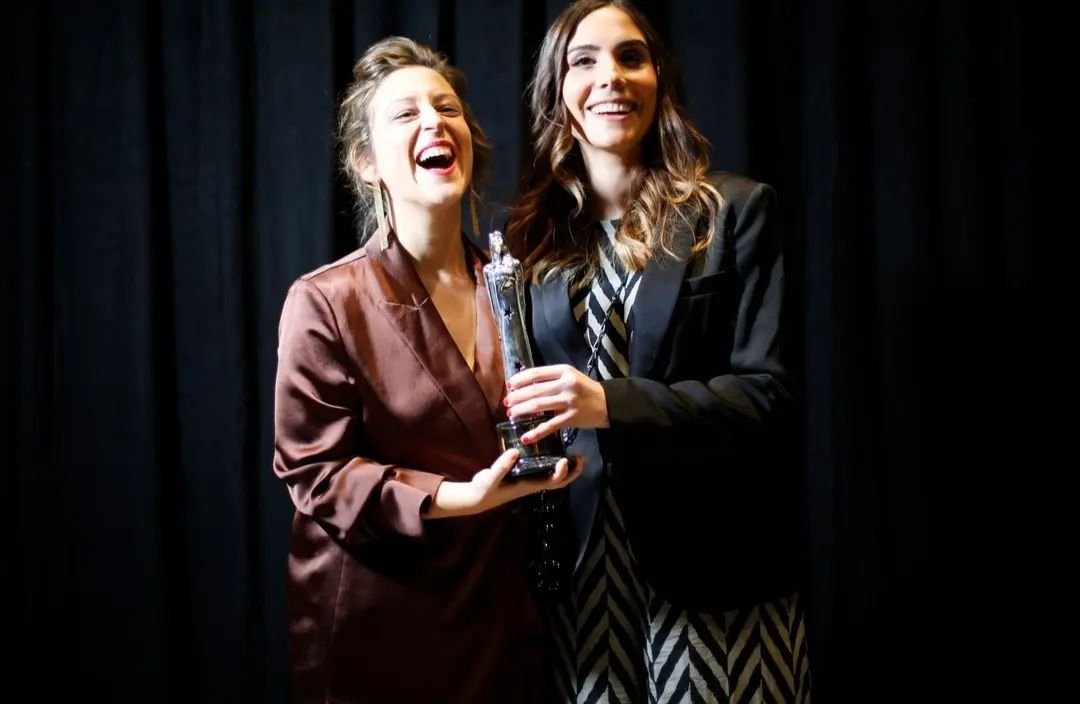
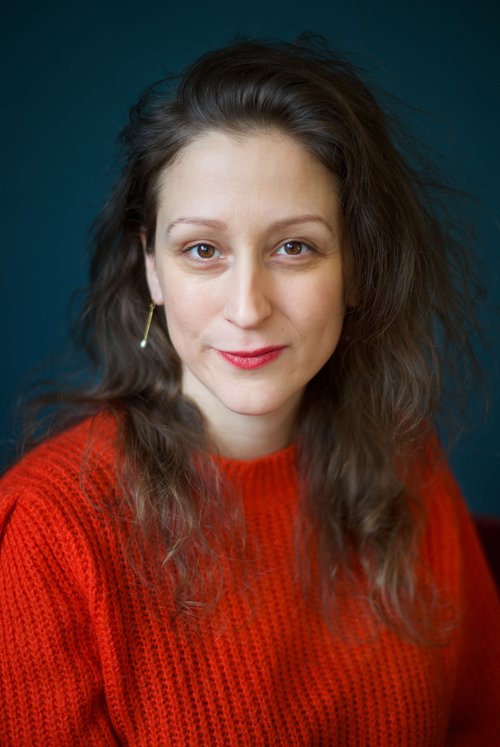
Over the past few years, Urška Djukić has quietly emerged as a distinct voice in contemporary European cinema. Her ability to blend form and feeling, poetry and politics has already been recognized at the highest levels. Her animated short documentary Granny’s Sexual Life / Babičino seksualno življenje (2021) won both a César Award and the European Film Award for Best Short Film, signaling the arrival of a filmmaker unafraid to tackle the untouchable with tenderness, irony and elegance.
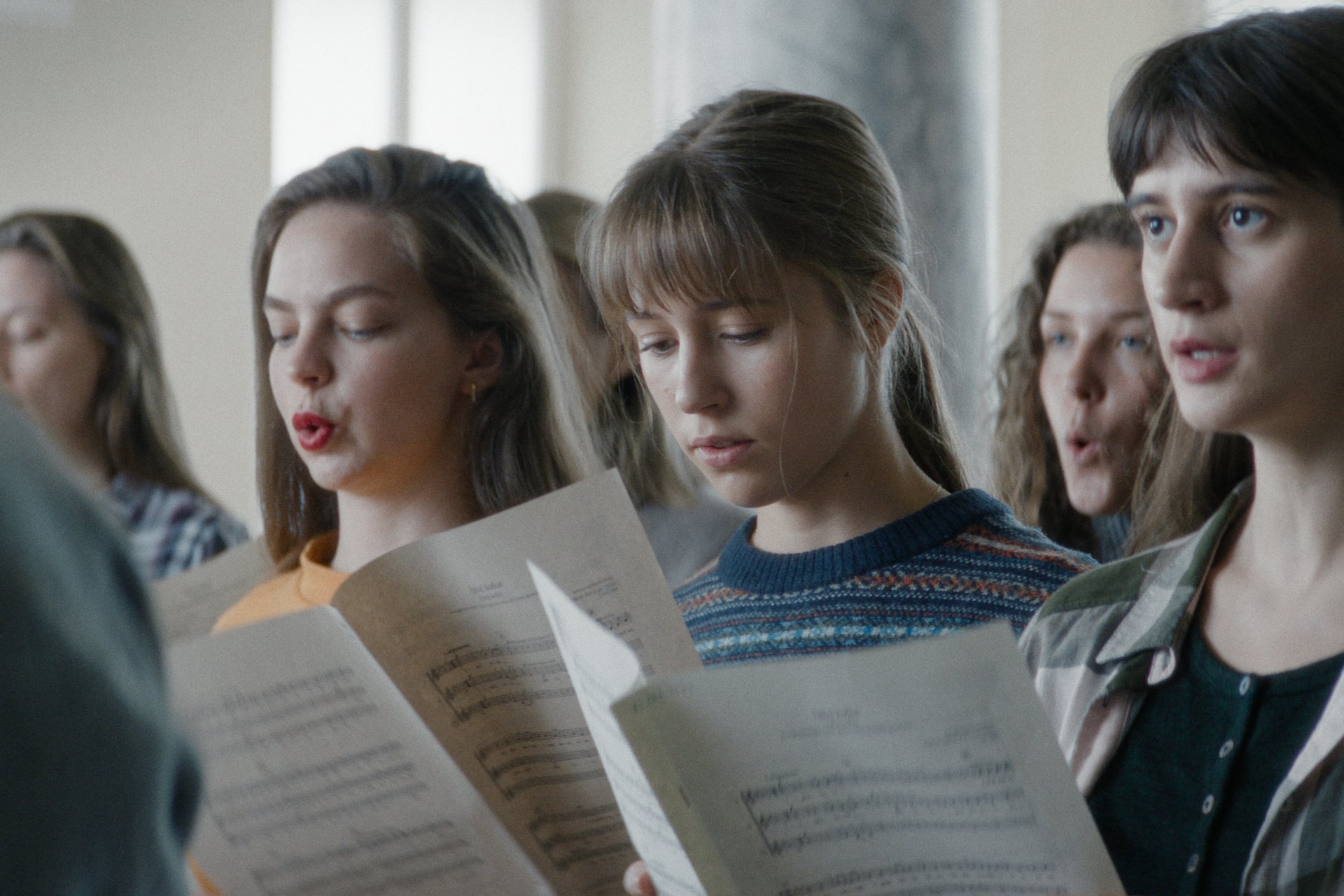
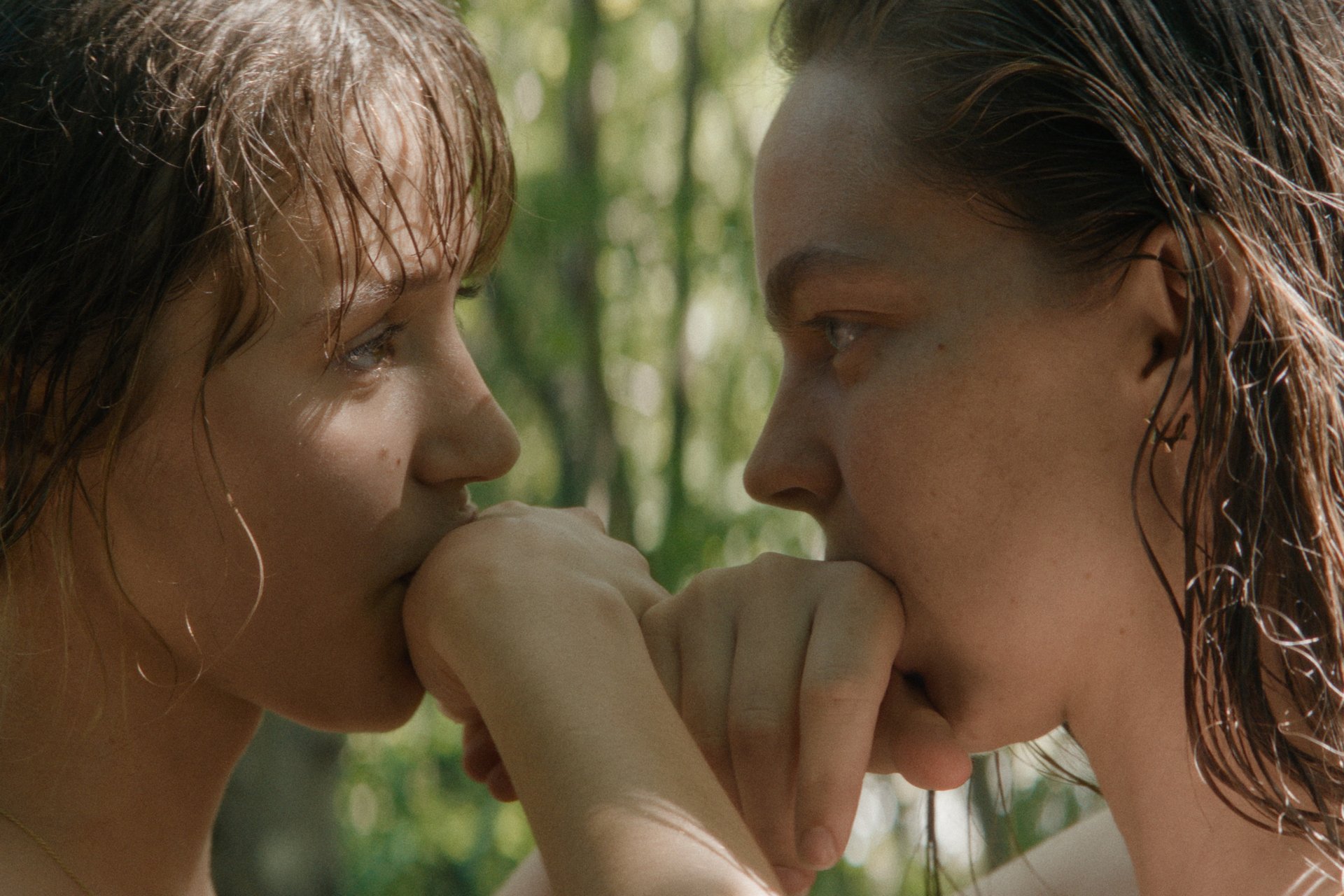
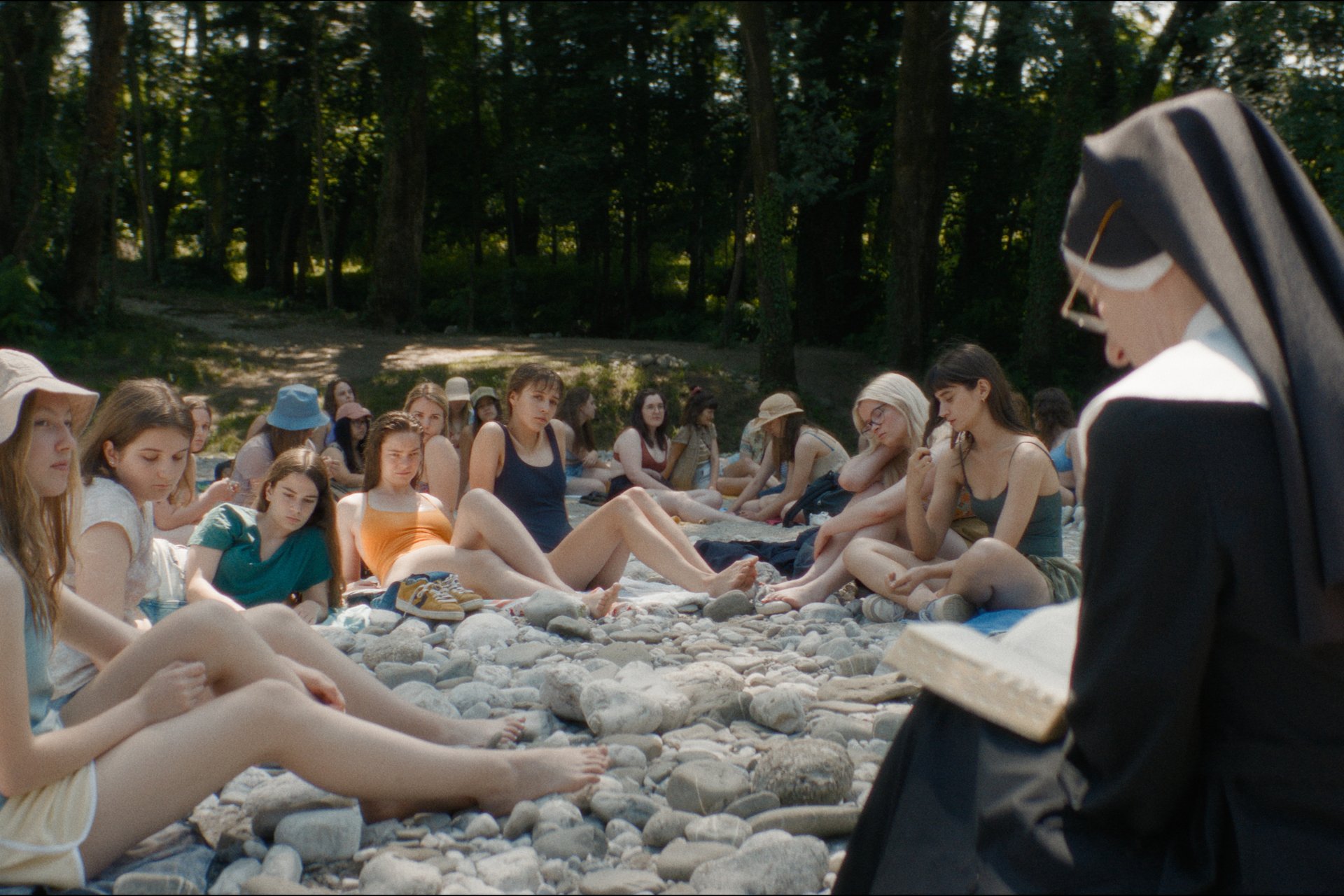
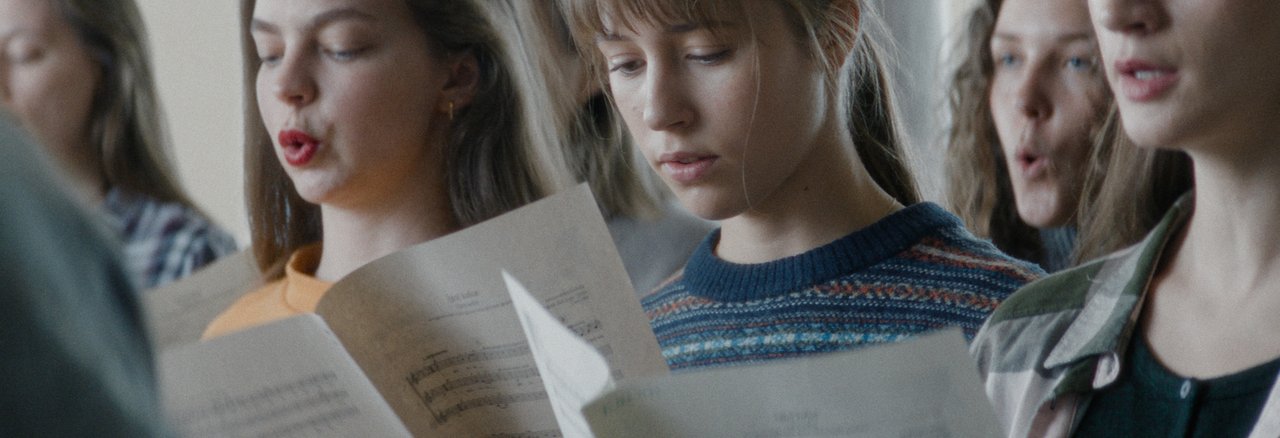
Djukić’s feature debut Little Troubled Girls premiered in the Perspectives section at this year’s Berlinale and has since been acquired for distribution in a remarkable number of territories from the United States and the UK to France, Germany, Taiwan and beyond. The film is a strikingly intimate and atmospheric exploration of girlhood, not as a coming-of-age cliché but as a complex terrain of resistance, vulnerability, performative obedience and emerging agency.
Developed over several years, Little Troubled Girls expands on themes already present in Djukić’s earlier work, female subjectivity, generational silence and societal constraint, but does so through a richer cinematic language. The film is characterized by a sharp sensitivity to gesture and imagery, an insistence on the unspoken and a refusal to simplify adolescent experience into a linear transformation.
At a time when international arthouse cinema is searching for fresh forms and unexpected perspectives, Djukić offers both: a storyteller grounded in a specific cultural and linguistic context, yet with a rare gift for emotional precision and visual storytelling that transcends borders. In this conversation, Djukić reflects on the creation of Little Troubled Girls, her journey from award-winning short films to her first feature, and the intuitive, layered creative process that continues to shape her voice as a filmmaker.
The film Little Troubled Girls attracted a lot of attention immediately after its premiere at the Berlinale. How did you experience the first wave of reactions?
After six long years of working on the film, I was truly excited for the premiere in Berlin. The wonderful responses, the positive international reviews and the strong interest in the film were a true reward for our years of hard work and persistence.
The film has already been sold to several major territories, from the US and the UK to France, Germany, Taiwan and Hong Kong. In your view, what attracts international distributors to such a locally rooted story that also feels universally resonant?
I believe it is the mysterious power of art to transcend boundaries. Occasionally, during the creative process, a deep and honest magic happens and, if you are lucky, you can capture it on film. It is such a universal energy that people from different cultural backgrounds can feel it.
The film subtly questions learned societal norms around girlhood, especially those that expect girls to be obedient, restrained, and “proper”. What interested you most about this theme, and how did you want to explore it through the story?
For me, the creative process is very intuitive and exploratory. I work with themes that are personally important to me but also socially relevant. I follow my inner guidance, my intuition, and often discover the essence of the film as I move through the process. I started by researching the female voice, one that has been historically silenced and oppressed, because it struck me how difficult it still is for many women to express themselves today. From the voice, I moved to the body, focusing on the sensations of a young girl caught in an internal conflict between physical awakening and societal rules that restrict it. I wondered how one can understand the world through the body and learn to trust one’s own senses. The body has its own instinctive intelligence that can guide us if we learn to listen. People deeply connected to their bodies tend to trust their inner compass more than external expectations and are less easily misled.
The performances in the film leave a very strong impression, tender yet filled with tension. How did you work with the actresses to build that tension between internal experience and external expectations?
We started working with the actors very early on and held many rehearsals. Nataša Burger, with her deep knowledge of improvisation, helped me as an acting coach. Together, we developed a series of exploratory exercises, beginning with more abstract work and gradually moving toward specific scenes from the script. We delved into every small gesture and motivation to achieve a strong sense of realism on screen.
The sense of societal pressure, inner rebellion and yearning is also strongly expressed through the film’s visual style. Composition, lighting, color and camera movement create a space where emotional tension is felt rather than explicitly stated.
I wanted the camera to stay very close to the characters so the audience could feel everything Lucija feels. Very early on, Lev Predan Kowarski, the director of photography, and I realized that when you get this close, things start escaping the frame and you cannot control them fully anymore. Suddenly, everything becomes much more mysterious. We also experimented with different techniques and lenses and made some unconventional technical decisions that many might consider wrong. But these experiments worked and helped create a unique visual signature. Lev is an exceptional cinematographer, and his understanding of light was key to building the film’s atmosphere.
You mention Lev Predan Kowarski, with whom you have now collaborated on three projects. Do you think long-term creative partnerships allow more freedom to experiment? Can you share an example of a particularly unusual technical decision that worked for you?
I believe the key to a successful collaboration is finding people who truly support you, with whom you genuinely enjoy working, and who bring something stronger or different than you could offer yourself. As for technical decisions, we chose to shoot with the Arri Alexa 35 and Cooke anamorphic lenses, but we kept the 1.5:1 (3:2) aspect ratio. This gave the film a more authentic look. With this choice, we built the mise-en-scène and shot compositions to find the right harmony within the frame.
Do you feel that through these visual choices you managed to express something that words could not?
Absolutely. The visuals, sound, and rhythmic elements influence the film’s overall language and, consequently, the viewer’s experience. Film is magical in that sense because sometimes you can say even more by not using words. Together with Lev, we aimed for something tender yet universal, authentic and timeless. We found it through the synergy of camera work, colors in set design and costumes, and the excellent contributions of production designer Vasko Kokalj and costume designer Gilda Venturini. Their work helped create a nostalgic authenticity. I must also mention the exceptional sound design by Julij Zornik and the precise editing by Vlado Gojun. Working with them was wonderful because they both have a strong and sensitive feel for rhythm and tempo, allowing everything to come together harmoniously.
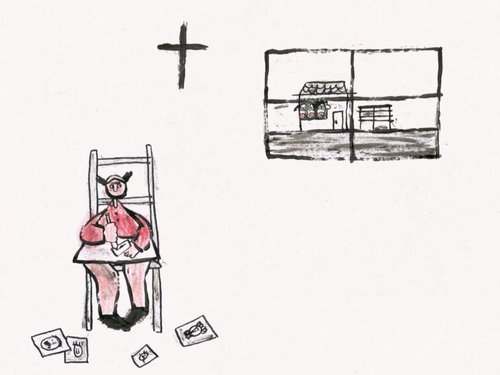
You have created several author-driven short films across different genres, live action, documentary and animation, marked by a subtle feminist note and a distinctive style. Your last short, Granny’s Sexual Life, won both the European Film Award and the César. How would you describe your creative evolution, in terms of both film language and thematic focus, from your earlier projects to Little Troubled Girls? Where do you see continuity, and where is the shift?
I would say my creative evolution is very intuitive and grows alongside me. The themes I explore across all my films are interconnected and socially engaged, centered around women’s experiences and the society we live in. I feel a strong inner drive to explore human behavior through film and offer something meaningful to society. If my work touches even one viewer and opens a doorway to deeper feelings or reflections on the world, I feel I have fulfilled my purpose.
Do you believe that it is precisely through personal stories, through very intimate fragments of life, that we can most powerfully address broader social questions? That the personal is where the political truly begins?
I believe so, yes. The personal is often deeply universal but, due to societal rules and constraints, it is often hidden. In both art and life, honesty is essential: not pretending, not trying to please. I believe that only when you honestly look deep within yourself, into your shadows and fears, can you better understand the world around you. From that understanding, you can create something that intuitively touches others.
Which stories or projects are calling to you next? Is there something you are particularly eager to explore next?
At the moment, I am developing a story based on the first witch trial in Slovenia, which took place in the 15th century in the region of Celje. It is about the forbidden love between Count Friderik II of Celje and Veronika Deseniška, a noblewoman of lower rank, a scandal that reverberated across European courts at the time. Today, six hundred years after Veronika’s death, her story remains a powerful part of Slovenian cultural and historical identity, a story about the relentless battle of an individual against the system.
Since you are already in the process of developing a new project, when, as an author, do you truly feel you have let go of a story and the characters you have spent so many years building and exploring? Do they continue to stay with you even after the film is finished? Are the “troubled girls” still with you?
Looking back at all my works, I notice a pattern. The birth of each new film seems to grow out of the one that came before. Everything is connected. One story leads into another and influences it. The creative process is the most magical thing I have ever witnessed in my life, and it shapes me profoundly as a person. I am deeply grateful to be able to make films and follow this inner calling.